
A new operations rule, with multiple effective dates
On May 28, 2026, federal agencies announced the Federal Independent Dispute Resolution operations final rule under the No Surprises Act. It updates communications, disclosures, payment and certified IDR procedures. The rule is final, but not every provision applies on the same date. CMS final-rule summary.
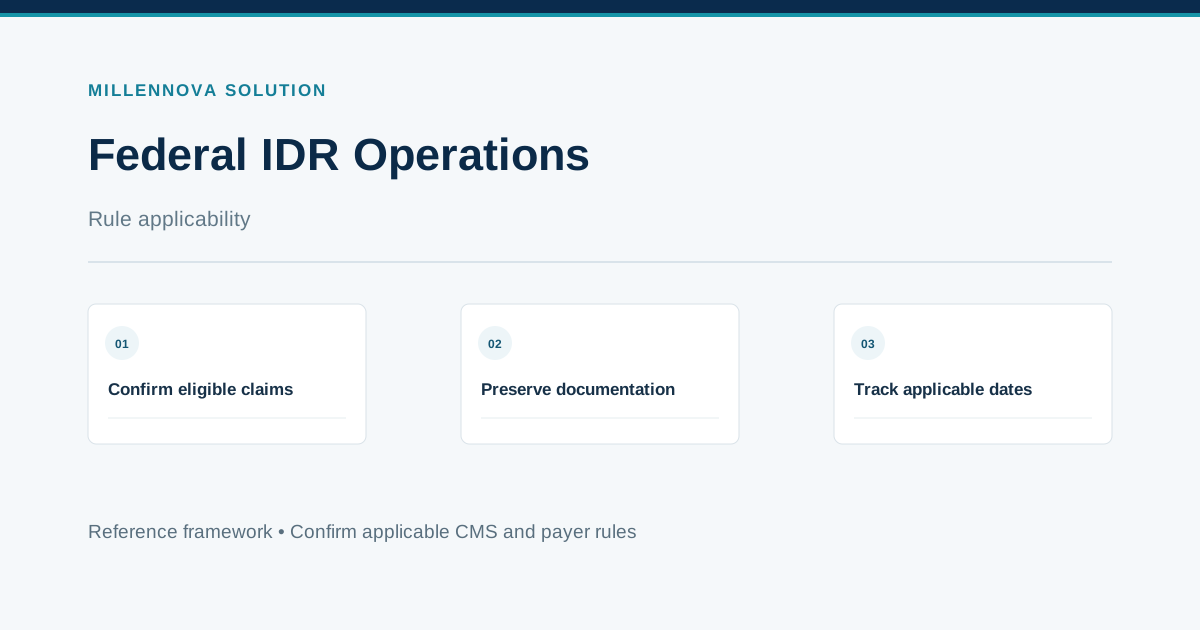
A dispute team should maintain an effective-date matrix rather than treating the publication date as universal eligibility for all workflow changes.
Three developments for claim operations
Administrative fees. CMS’ implementation timeline lists a $15 administrative fee per party per dispute applicable beginning June 11, 2026. Always verify the governing fee and applicability for the dispute period you are handling.
Disclosures and remittance reasoning. The rule addresses qualifying payment amount information and the use of claim adjustment reason codes (CARCs) and remittance advice remark codes (RARCs). The timeline identifies January 1, 2027 for certain CARC/RARC disclosure requirements for items or services furnished on or after that date.
Batching. Updated batching provisions, including limits, have a distinct applicability trigger: the CMS implementation timeline cites open negotiation periods beginning November 1, 2026. A team should not retroactively apply those provisions to different cohorts of disputes. CMS implementation timeline.
Operational workflow to update
- Confirm whether each claim is within the federal NSA framework at all. State law, plan type, service setting and other eligibility distinctions matter.
- Preserve initial payment or denial notices, clean claim identifiers and the chronology of negotiations.
- Record the applicable rule version and required disclosures for each dispute.
- Validate fee handling and batching logic against the relevant applicability dates.
- Escalate legal interpretation and eligibility disputes to qualified counsel instead of having operations personnel assume the outcome.
Why this affects billing companies
Poor source data from the revenue cycle leads to avoidable disputes: inconsistent claim IDs, missing remittance details, untraceable payer communications and undocumented negotiation dates. Build an audit trail before calculating expected dispute costs or recoveries.
This article discusses non-attorney administrative process support, not a promise of eligibility, award or payment. Federal rules and litigation developments should be checked again at the time of filing.
Primary references: CMS final rule and CMS implementation timeline.
Reviewed October 10, 2026. This analysis is informational and should be checked against current payer, program and contract requirements before operational use.