
What is scheduled for 2027?
CMS’ Interoperability and Prior Authorization final rule (CMS-0057-F) established new information-sharing and prior authorization requirements for specified impacted payer categories. Several operational requirements started in 2026, while the API requirements generally have a January 1, 2027 compliance date. That is a payer-focused rule; it does not mean every practice or every insurance line will immediately use the same technology. CMS rule fact sheet.
The opportunity for revenue cycle teams is disciplined intake and prior authorization tracking—not assuming that application programming interfaces automatically solve every denial.
What to review in an existing authorization workflow
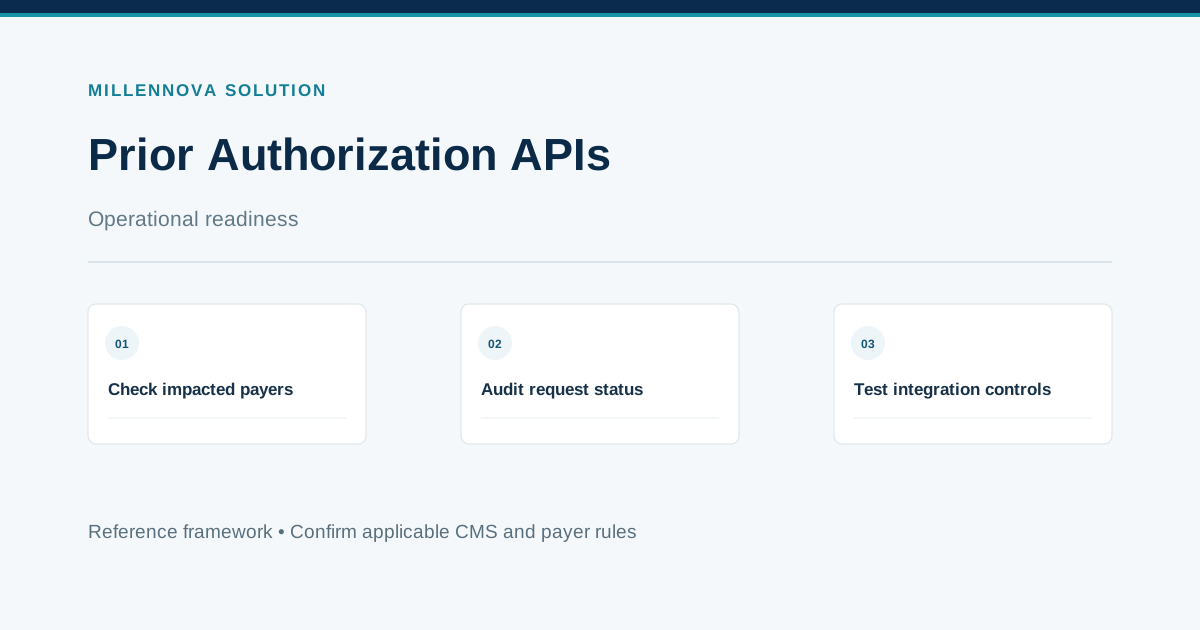
Eligibility and plan applicability. Capture the product line, payer, plan and service so your team knows whether a federal rule requirement applies.
Authorization evidence. Maintain request identifiers, submission method, requested service, determination, expiration and any payer-stated denial rationale in the system of record.
Clinical documentation. Assign medical necessity questions to clinical teams. Billing staff can orchestrate and escalate records, but should not create facts absent from the record.
Status and queue ownership. Record when an item is pending, approved, denied, expired or awaiting additional information. Aging reports need to show the next authorized action, not just an undifferentiated pending label.
Integration controls. Assess vendor readiness, authenticated access, audit logging, sensitive data minimization and failure handling before enabling automation.
What the 2026 operational requirements taught us
The rule also includes operational process improvements and public reporting of prior authorization metrics, with compliance dates that began in 2026. Practices should distinguish existing workflow obligations from future technical API features. Do not assume the deadlines, timeframes or exceptions for a particular request without checking the impacted payer and service.
A practical preparation checklist
Create an inventory of top authorization-dependent procedures; request a roadmap from your EHR, practice management and clearinghouse vendors; identify incomplete handoffs between scheduling, clinical and revenue cycle teams; and track denial reasons that stem from insufficient or invalid authorizations.
After deployment, test real-world exceptions: outages, payer redirects, inconsistent service codes, and duplicate requests. Measure how quickly valid determinations reach scheduling and billing, while protecting patient data.
Primary reference: CMS — CMS-0057-F.
Reviewed October 10, 2026. This analysis is informational and should be checked against current payer, program and contract requirements before operational use.