
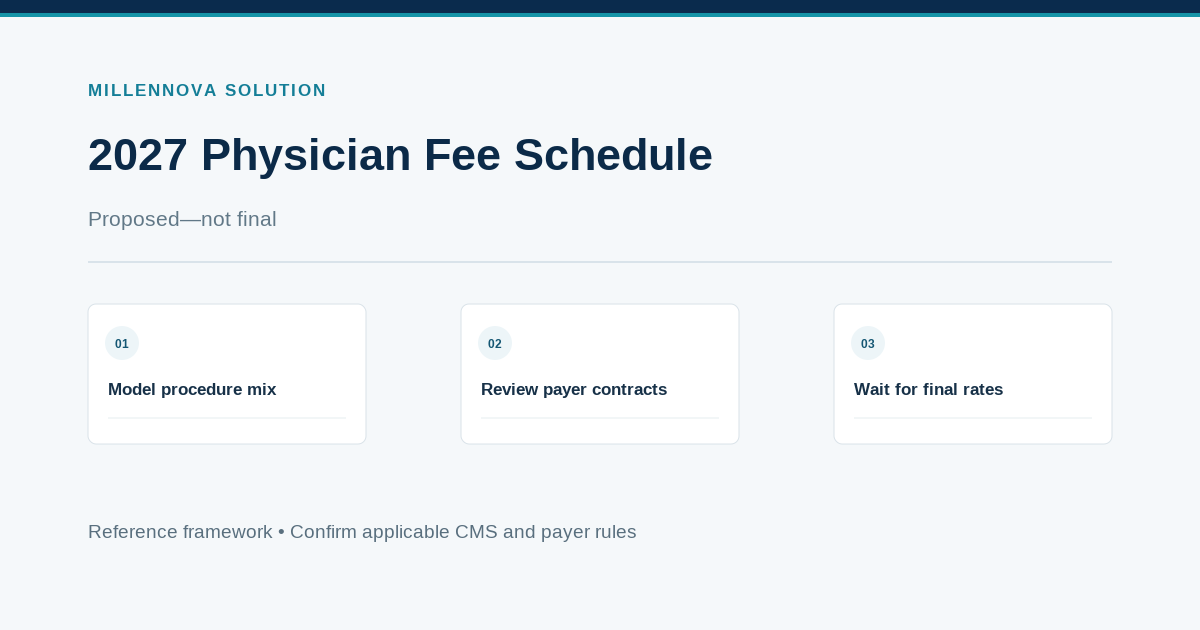
The distinction that matters: proposed is not final
On July 14, 2026, CMS released the CY 2027 Medicare Physician Fee Schedule proposed rule (CMS-1848-P). The proposal includes changes to valuation methodology, practice-expense assumptions and multiple payment and quality-program policies. These are proposals; do not apply draft reimbursement assumptions as if they are final fee schedule rates. CMS 2027 PFS fact sheet.
For practice administrators, the operational work starts before the final rule: know which CPT and HCPCS families drive your collections, how your practice’s commercial agreements reference Medicare, and which components should be recalculated when final values are published.
Audit your revenue exposure by specialty
Procedure mix. Build a utilization extract covering procedure families, modifiers, location of service and payer class. A high-impact single code may matter more than a small adjustment across dozens of low-volume visits.
Place of service. Model professional versus facility settings separately. Practice expense assumptions can differ across settings and any proposed methodology should be assessed against the final published payment files.
Contract language. A percentage-of-Medicare contract may incorporate annual updates differently from a negotiated fixed fee schedule. Obtain the applicable executed agreement before estimating contractual changes.
Denials and coding. Rate changes are not the same as coverage, code bundling, prior authorization or medical necessity changes. Keep those workstreams distinct so reimbursement variance reports are actionable.
Build a two-stage rate-monitoring plan
First, maintain a proposal monitoring workbook that records the CMS proposal, potential affected services and sensitivity scenarios. Do not present its outcomes as guaranteed revenue changes.
Second, after publication of the applicable final rule and fee schedule files, update your models, review downstream contract implications, validate PM system rates and inspect initial explanations of benefits. Maintain separate comparisons for Medicare and each commercial payer.
Management questions for a 2027 budget review
- Which 20 codes account for the highest share of net receipts?
- Where does the practice use global surgery or multiple-procedure billing?
- What percentage of commercial agreements reference Medicare rates?
- Who approves charge-master and fee schedule changes?
The strongest early response is a reliable baseline, not a speculative reimbursement headline.
Primary reference: CMS — CY 2027 Physician Fee Schedule Proposed Rule.
Reviewed October 11, 2026. This analysis is informational and should be checked against current payer, program and contract requirements before operational use.
Policy changes to model as scenarios, not final rates
The July 2026 proposal discusses different PFS conversion factors for qualifying APM participants and non-qualifying practitioners, potential changes to E/M visits on the same day as procedures carrying a global period, and proposed remote-monitoring and practice-expense policies. These are not yet instructions to modify production billing rules.
A meaningful model uses CPT/HCPCS-level historical volume, work and practice-expense RVUs, locality, place of service and modifiers. One headline reimbursement percentage applied to total gross charges can conceal a major change in a high-volume specialty procedure.
A two-stage management response
Before final rulemaking, create sensitivity scenarios and document each proposal’s stated rationale and affected procedures. Keep any forecast visibly labeled proposed. After the final rule and files are available, validate the actual rates, update the approved fee schedules, review payer contracts that reference Medicare and investigate discrepancies in initial remittances.
Track contractual interpretation separately: commercial payer agreements do not automatically update simply because CMS publishes a proposal. Practice executives should approve both methodology and assumptions before a budget forecast is circulated.
A specialty-specific sensitivity example
A practice with predominantly office visits and another with high volumes of surgery may have materially different exposure to the same proposed rule. Build a baseline for each service category, then change only one policy assumption at a time: conversion factor, work RVUs, practice expense, place of service or proposed same-day E/M treatment. This distinguishes the source of the projected change.
Should a proposed rate be loaded into the billing system? No. Keep prospective scenarios outside live payment configuration until final applicable guidance and approved internal change control are available.
How should commercial payers be assessed? Review the contract’s actual reference to Medicare, including effective year, locality, carve-outs and update mechanism. A Medicare proposal does not necessarily translate into the same commercial reimbursement movement.
Sign-off
A final budget report should disclose the underlying code mix, period, excluded items, proposed-rule assumptions and approval status. When the final rule and subsequent files are published, replace assumptions and explain the difference from earlier projections.
References
Editorial update: October 11, 2026. Confirm the current requirements and applicable payer rules before operational use.