
What changed and why billing teams should care
CMS and CDC have published the FY 2027 ICD-10-CM code files and coding guidelines. The diagnosis code set is effective for encounters and discharges from October 1, 2026, through September 30, 2027. Inpatient procedure coding uses the separately maintained ICD-10-PCS files, which have their own applicable update windows. Official CMS ICD-10 releases.
The practical risk is not just the existence of new codes. A practice can carry forward stale charge-master selections, EHR favorites, superbills and denial rules even after its coding engine is updated.
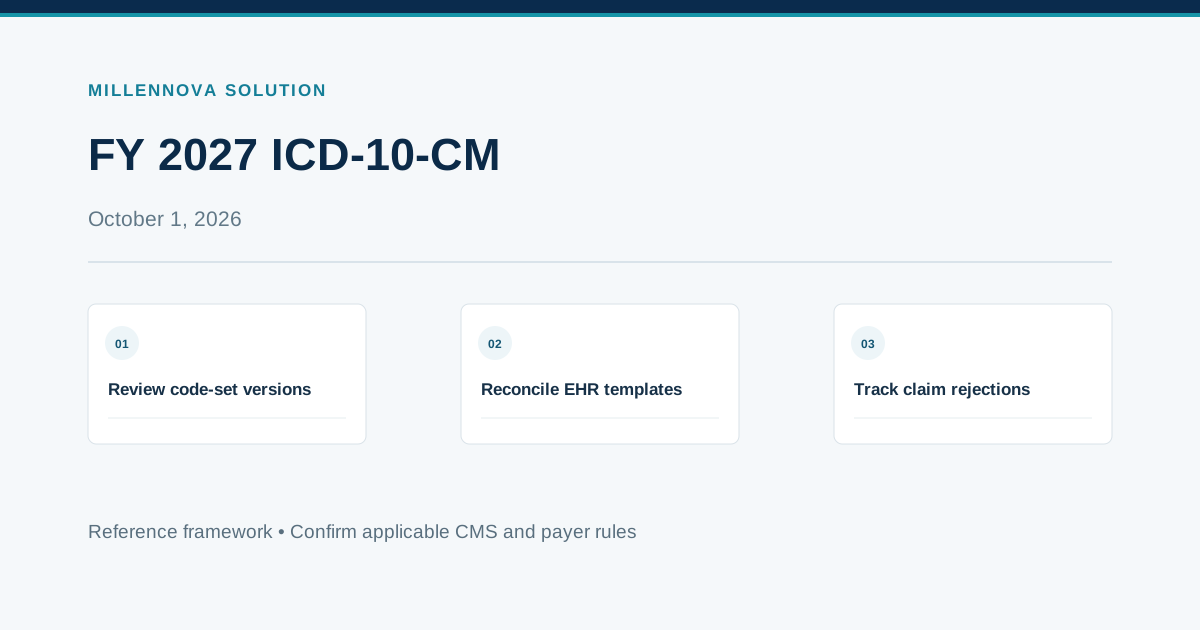
Five controls to verify this week
- Confirm the code-set effective date. Review encounter date, billing setting and applicable inpatient discharge date rather than assuming every 2026 claim uses one version.
- Reconcile EHR and PM favorites. Identify retired, expanded or more-specific diagnosis selections, including templates carried forward from earlier encounters.
- Test claim scrubbing. Send synthetic claims through clearinghouse validation for high-volume procedures and known difficult diagnosis-to-procedure pairings.
- Coordinate provider documentation. Where code specificity has changed, determine which documentation fields need clarification. Do not let billing personnel invent clinical findings.
- Monitor the first remittances. Separate new invalid-code rejections from unrelated authorization, eligibility and policy denials.
Why the surgical revenue cycle is exposed
Orthopedics, spine surgery, neurosurgery, trauma and other procedure-intensive specialties can have complex diagnosis-to-procedure relationships. However, a change in the code list does not automatically mean a payer’s coverage or medical necessity policy changed. Validate each payer’s actual published policy and the date that policy applies.
A useful readiness dashboard segments errors by provider, location, payer, code and date of service. Include a workflow for escalation back to coding or clinical leadership when the record itself is incomplete.
What to ask your billing vendor
Request a dated confirmation of the FY 2027 code-library deployment, test evidence for common encounter types, the process for exception monitoring, and an owner for resubmission or appeal triage. A claim refile should never be treated as automatically permitted: timely-filing and correction rules remain payer and situation specific.
Primary reference: CMS — ICD-10 Code Updates.
Reviewed October 10, 2026. This analysis is informational and should be checked against current payer, program and contract requirements before operational use.