
What insurance verification really involves
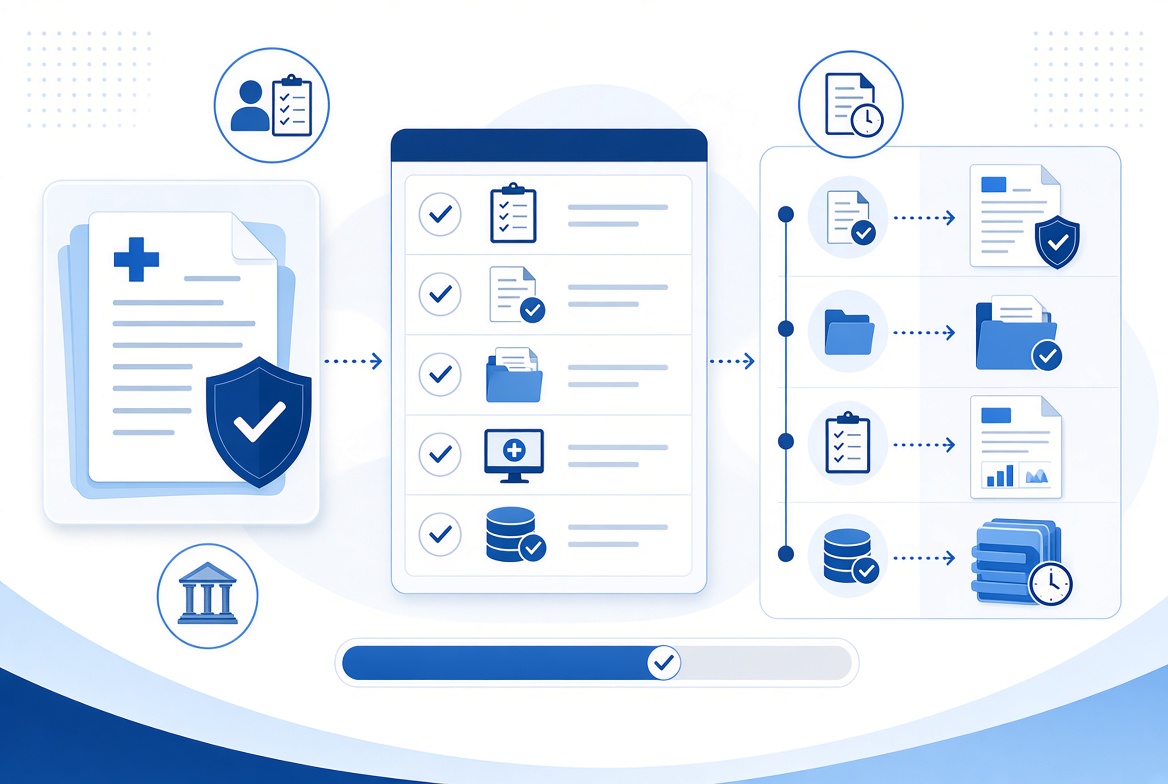
Verification is more than confirming that a patient has an insurance card. A complete check typically includes:
- Active coverage on the date of service
- Benefit levels, deductibles, and copayments or coinsurance
- Network status (in-network versus out-of-network) for the provider and location
- Prior-authorization or referral requirements for the planned service
- Coordination-of-benefits order when multiple plans exist
- Any plan-specific limitations (visit caps, site-of-service rules, medical-necessity criteria)
Performing this check before the service reduces eligibility denials and allows accurate patient estimates. Performing it only at claim submission is usually too late.
Information commonly required
- Patient demographics and subscriber relationship
- Payer name, member ID, and group number
- Referring or ordering provider when applicable
- Planned procedure codes and diagnosis codes (or at least the clinical reason)
- Site of service
The exact data elements vary by payer. Real-time eligibility transactions (270/271) provide a useful baseline; many plans still require portal or phone confirmation for authorization details.
Managing multiple insurance plans and payer-specific requirements
When a patient has more than one plan:
- Determine the coordination-of-benefits order (primary versus secondary).
- Verify benefits and authorization requirements for each plan.
- Bill the primary plan first.
- Once the primary remittance is received, submit the secondary claim with the required primary payment information.
- Track both claims in the workqueue so secondary follow-up is not forgotten.
Payer-specific rules (authorization thresholds, site-of-service limitations, documentation requirements) must be documented in the registration or charge-entry checklist rather than left to memory.
Claim follow-up timelines and operational workflow
A practical follow-up cadence is:
- Clearinghouse acknowledgment: same day or next business day
- Payer status check: 7–14 days after submission if no response
- First denial review: within a few business days of receipt
- Appeal or correction: within the payer’s stated window
- Escalation: if no response after the payer’s normal cycle
Document each contact or portal check with the outcome and next date. Shared workqueues prevent items from being lost when staff change.
Batch versus real-time submission and electronic versus paper claims
Most practices submit electronically through a clearinghouse. Electronic claims receive faster acknowledgments and status updates than paper claims. Batch submission groups claims for efficient transmission; real-time submission (where available) provides immediate acceptance feedback. Paper filing is slower, harder to track, and more prone to loss; use it only when a payer explicitly requires it or electronic submission is unavailable.
Reading an Explanation of Benefits (EOB)
An EOB or remittance shows:
- Billed amount
- Allowed amount
- Paid amount
- Adjustments with group codes and CARCs
- Patient responsibility
- Any remark codes
Reconcile the paid amount against the expected contractual rate. Note any unexpected adjustments for follow-up. Patient-responsibility amounts (for example PR-1 deductible) are billed to the patient only after confirming the adjustment is correct.
Tracking claim status and payment status
Once a claim is submitted, status tracking needs a consistent cadence and a place to record the outcome:
- Clearinghouse acknowledgment (accepted or rejected)
- Payer acknowledgment or pending status
- Adjudication result (paid, denied, or pended for information)
- Payment posting and reconciliation against the expected amount
- Next action and owner for any open item
Practices that rely solely on portal logins without a shared workqueue often lose visibility when staff change or volume increases.
What happens to claims that are not paid on time
Unpaid claims age. After the payer’s timely-filing or appeal window closes, many become uncollectible. Even before that deadline, delayed follow-up increases the chance that required documentation is harder to obtain or that the account is forgotten. Regular aging review with documented next actions is the practical control.
Related resources
References
- CMS Eligibility Transaction guidance
- X12 270/271 Eligibility standards (technical transaction set)
Editorial note: October 12, 2026. Payer rules and transaction formats change. Verify current requirements for each plan.