
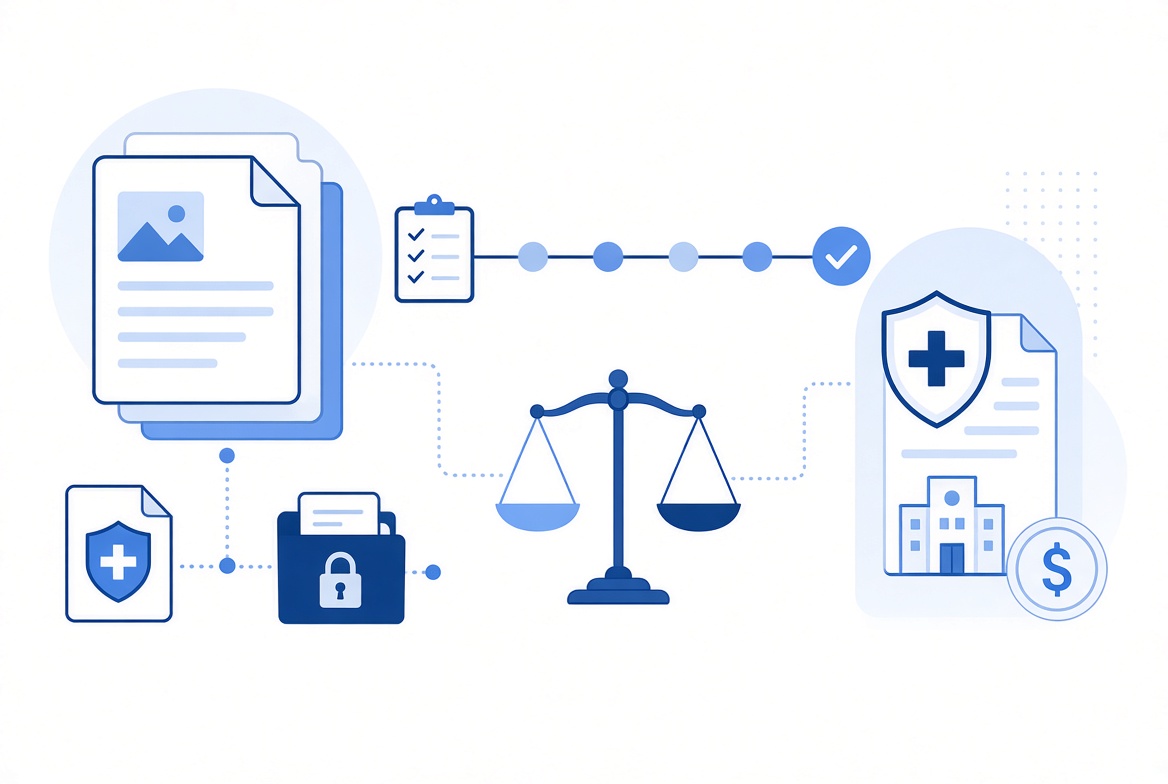
Purpose of standardized remittance codes under the No Surprises Act
The 2026 Federal Independent Dispute Resolution Operations final rule requires payers to use specific Claim Adjustment Reason Codes (CARCs) and Remittance Advice Remark Codes (RARCs) to indicate whether an item or service is subject to No Surprises Act surprise-billing protections and the federal IDR process. CMS has issued guidance on the codes and the circumstances in which they should be used.
Mandatory compliance for items and services furnished on or after January 1, 2027 is anticipated once the codes are incorporated into the official industry code set. Earlier remittances may not yet carry the required indicators. Teams should not assume eligibility solely from the presence or absence of a code.
Operational use of the codes
When the codes are present they can serve as an early signal:
- Flag claims that appear eligible for open-negotiation or IDR review.
- Separate ordinary payer follow-up from potential dispute pathways.
- Document when required codes are missing and whether an extension request may be appropriate.
- Support internal reporting on the volume of potentially NSA-related claims by payer and specialty.
Case-specific review is still required. A code is an indicator, not a final eligibility determination.
Documentation practices
Record the remittance date, the codes present, and any related payer correspondence. If codes are missing or inconsistent, note the gap and preserve the original remittance for later reference. Operations staff should escalate eligibility questions rather than making final determinations.
This remains non-attorney process guidance. Check current CMS guidance and applicable rules at the time of review.
Related service: NSA & IDR Operational Support
A remittance-code flag is not a jurisdiction decision
CARCs and RARCs explain claims adjustments and can improve triage. The 2026 federal IDR operations rule introduces specified disclosure requirements with a distinct January 1, 2027 service-date applicability trigger. A code value alone does not establish that a payer, plan, setting or item meets the No Surprises Act’s federal IDR criteria.
An automated filter should therefore classify a claim as requires eligibility review, not IDR eligible. A qualified reviewer must assess state-versus-federal jurisdiction, the service, coverage type, initial payment or denial and subsequent open-negotiation evidence.
Suggested triage table
| Signal | Follow-up |
|---|---|
| Relevant payer code/remark | Retrieve the full remittance and context |
| Missing QPA data where required | Request and preserve appropriate disclosure |
| Potential protected OON service | Verify setting and coverage facts |
| State-law dispute route | Separate from federal IDR workflow |
| Expired or unverified negotiation window | Stop auto-filing and escalate |
Store the raw ERA with the interpreted code text and the code-set version. Updated code mappings should be reviewed against current federal guidance rather than inferred from last year’s transactions.
A safe remittance-code screening algorithm
The screening layer may detect CARCs or RARCs associated with particular payment or NSA-related disclosures, but its output should be a review priority, not a final eligibility conclusion. Capture the complete ERA context, payer and plan, date of service, service setting and amount allowed. Codes can vary by transaction context and code-set release.
Does an OON code automatically mean a federal dispute can be initiated? No. State law, plan type, coverage rules and the protected service category can change the applicable process.
What if the expected QPA or disclosure is missing? Record the gap, retain the original remittance and follow the current CMS process for requesting or addressing information rather than inventing a qualifying amount.
Human review checkpoint
Require reviewers to sign off on jurisdiction, covered item or service, initial payment/denial, negotiation chronology and deadlines before preparing a federal IDR case. Verify the applicability date of the 2026 rule’s new CARC/RARC provisions. A well-designed flag reduces missed cases without increasing erroneous filings.
References
Editorial update: October 11, 2026. Confirm current program, payer and professional guidance before operational use.